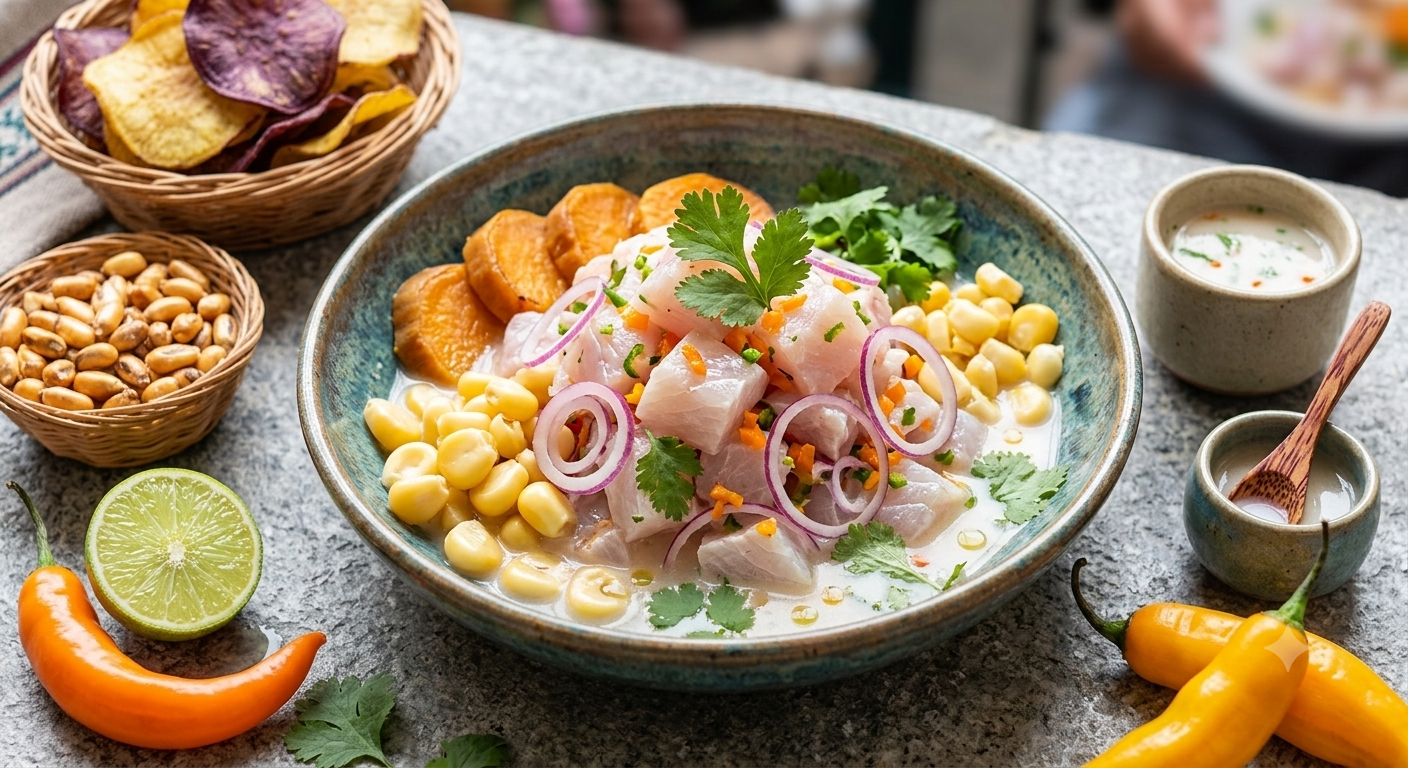
Fresh, bright, and bursting with citrus flavor, Peruvian ceviche is one of South America’s most iconic dishes. Made with pristine fresh fish, tangy lime juice, crisp red onions, spicy peppers, and fragrant cilantro, this refreshing appetizer is simple, elegant, and incredibly satisfying.
Although ceviche is enjoyed throughout Latin America, Peru is widely recognized as its birthplace and proudly considers it the country’s national dish. The secret to authentic Peruvian ceviche isn’t a long list of ingredients—it’s using the freshest seafood possible and allowing each ingredient to shine.
Contrary to popular belief, the fish isn’t actually “cooked” by the lime juice. Instead, the acid denatures the proteins, transforming the fish from translucent to firm and opaque while preserving its delicate flavor and texture. Because the fish remains raw, it’s essential to purchase the freshest, highest-quality fish you can find.
Traditionally, Peruvian ceviche is made with corvina, a mild white fish from the Pacific Ocean. Outside Peru, sea bass, snapper, halibut, grouper, and mahi-mahi all make excellent substitutes. The finished dish is typically served alongside sweet potato, giant Peruvian corn (choclo), and crunchy toasted cancha corn, creating the perfect balance of citrus, spice, sweetness, and texture.
Classic Peruvian Ceviche
Prep Time: 20 minutes
Marinating Time: 5–10 minutes
Total Time: 30 minutes
Servings: 6
Ingredients
For the Ceviche
- 1½ pounds very fresh white fish (corvina, sea bass, snapper, halibut, grouper, or mahi-mahi), cut into ¾-inch cubes
- 1 small red onion, sliced paper thin
- Juice of 8–10 Persian limes (or 18–24 Key limes), freshly squeezed
- 1–2 ají limo peppers, thinly sliced (or Fresno peppers; use a small amount of habanero if needed)
- 1 clove garlic, finely grated (optional)
- ¼ cup chopped fresh cilantro
- Sea salt, to taste
- Freshly ground black pepper
- 1–2 ice cubes (optional, to soften especially acidic lime juice)
Traditional Garnishes
- Boiled sweet potato
- Boiled corn or Peruvian choclo
- Toasted cancha (Peruvian corn nuts)
- Lettuce leaves (optional)
- Additional sliced onions and cilantro
Instructions
- Cut the fish into bite-sized cubes and refrigerate until ready to use.
- Place the sliced onions into a bowl of ice water for about 10 minutes to mellow their sharpness. Drain thoroughly.
- Place the chilled fish into a glass or ceramic bowl. Season lightly with salt and black pepper.
- Add the grated garlic (if using), sliced peppers, half of the onions, and chopped cilantro.
- Pour the freshly squeezed lime juice over the fish until just covered. If your limes are particularly acidic, add one or two ice cubes to slightly mellow the citrus.
- Gently toss everything together and allow the fish to marinate for 5 to 10 minutes. The fish should turn opaque while remaining tender. Avoid marinating longer than 15 minutes, as the texture will become firm and chalky.
- Taste and adjust the seasoning with additional salt if needed.
- Spoon the ceviche into chilled serving bowls. Top with the remaining onions, a little more cilantro, and additional sliced peppers if desired.
- Serve immediately with boiled sweet potato, boiled corn, and toasted cancha.
Chef’s Tips
- Always use the freshest, sushi-grade quality fish available.
- Freshly squeezed lime juice is essential. Bottled lime juice simply won’t produce the same bright flavor.
- Traditional Peruvian ceviche is intentionally simple. Tomatoes, avocado, cucumbers, bell peppers, vinegar, and olive oil are generally not part of the classic recipe.
- The flavorful citrus marinade that forms in the bowl is known as leche de tigre (“tiger’s milk”) and is considered one of the best parts of the dish.
Why Peru Is Famous for Ceviche
Every chef occasionally looks outside their own kitchen for inspiration, and one of our favorite ways to discover new recipes is by letting the world choose for us.
Several years ago, we began a tradition of spinning a globe and allowing chance to select a different country each week. Our goal was simple: prepare a complete meal inspired by that nation’s culinary traditions, including an appetizer, main course, side dishes, and dessert. It has become one of our favorite ways to experience cultures from around the world without leaving home.
One spin landed on the Republic of Peru.
Before diving into Peruvian cuisine, my knowledge of the country was surprisingly limited. Years earlier, our company had been awarded a government contract involving a nationwide satellite communications network. My brother spent nearly a year working throughout Peru and returned home captivated by the country’s beauty, history, and warm, welcoming people. My own impression, however, was mostly shaped by images of the Andes Mountains, the Amazon rainforest, Machu Picchu, and the ancient Inca civilization.
It didn’t take long to discover that Peru is also one of the world’s greatest culinary destinations.
A Country of Extraordinary Diversity
Peru is the third-largest country in South America and boasts an astonishing range of landscapes. Along the Pacific coast stretches a narrow desert that is home to Lima, the nation’s capital and more than half of Peru’s population. To the east rise the towering Andes Mountains, whose snowcapped peaks have shaped the country’s agriculture and culture for thousands of years. Beyond the mountains lies the vast Amazon rainforest, one of the most biodiverse regions on Earth.
This remarkable geography has given Peru access to an incredible variety of ingredients unlike almost anywhere else in the world.
The cold Humboldt Current flowing along Peru’s Pacific coast produces one of the richest fisheries on the planet, making exceptionally fresh seafood readily available. The Andes contribute hundreds of varieties of potatoes, corn, peppers, and herbs, while the Amazon supplies tropical fruits, spices, and unique native ingredients.
A Culinary Crossroads
Peruvian cuisine reflects centuries of cultural exchange.
Ancient civilizations such as the Chavín, Moche, Nazca, and Inca developed sophisticated agricultural techniques long before European explorers arrived. Spanish colonists later introduced new livestock, fruits, herbs, and cooking methods. African traditions, brought by enslaved people, added new flavors and techniques, while later waves of Chinese and Japanese immigrants transformed Peruvian cuisine even further.
These influences gave rise to world-famous culinary styles such as Chifa, which blends Chinese and Peruvian cooking, and Nikkei, which combines Japanese precision with Peru’s remarkable seafood.
Ceviche sits at the center of this culinary heritage. Its simplicity showcases Peru’s exceptional ingredients while reflecting centuries of cultural evolution.
The Secret to Authentic Peruvian Ceviche
Unlike many versions found elsewhere, authentic Peruvian ceviche relies on restraint.
There are no tomatoes, avocado, heavy sauces, or elaborate seasonings to distract from the seafood itself. Instead, perfectly fresh fish is briefly cured in lime juice and complemented with crisp onions, spicy peppers, cilantro, and just enough salt to enhance the natural flavors.
The result is bright, refreshing, and incredibly balanced—a dish that has become a symbol of Peru itself.
Whether you’re serving it as an appetizer on a warm summer afternoon or as the centerpiece of a seafood feast, this classic Peruvian ceviche brings together centuries of tradition in every bite.
Buen provecho!
Classic Peruvian Ceviche
DESCRIPTION
INGREDIENTS
- 1½ pounds very fresh white fish (corvina, sea bass, snapper, halibut, grouper, or mahi-mahi, cut into ¾-inch cubes)
- 1 small red onion (sliced paper thin)
- Juice of 8–10 Persian limes (or 18–24 Key limes, freshly squeezed)
- 1 –2 ají limo peppers (thinly sliced (or Fresno peppers; use a small amount of habanero if needed))
- 1 clove garlic (finely grated (optional))
- ¼ cup chopped fresh cilantro
- Sea salt (to taste)
- Freshly ground black pepper
- 1 –2 ice cubes (optional, to soften especially acidic lime juice)
- Traditional Garnishes
- Boiled sweet potato
- Boiled corn or Peruvian choclo
- Toasted cancha (Peruvian corn nuts)
- Lettuce leaves (optional)
- Additional sliced onions and cilantro
INSTRUCTIONS
- Cut the fish into bite-sized cubes and refrigerate until ready to use.
- Place the sliced onions into a bowl of ice water for about 10 minutes to mellow their sharpness. Drain thoroughly.
- Place the chilled fish into a glass or ceramic bowl. Season lightly with salt and black pepper.
- Add the grated garlic (if using), sliced peppers, half of the onions, and chopped cilantro.
- Pour the freshly squeezed lime juice over the fish until just covered. If your limes are particularly acidic, add one or two ice cubes to slightly mellow the citrus.
- Gently toss everything together and allow the fish to marinate for 5 to 10 minutes. The fish should turn opaque while remaining tender. Avoid marinating longer than 15 minutes, as the texture will become firm and chalky.
- Taste and adjust the seasoning with additional salt if needed.
- Spoon the ceviche into chilled serving bowls. Top with the remaining onions, a little more cilantro, and additional sliced peppers if desired.
- Serve immediately with boiled sweet potato, boiled corn, and toasted cancha.
Notes
Always use the freshest, sushi-grade quality fish available.
Freshly squeezed lime juice is essential. Bottled lime juice simply won’t produce the same bright flavor.
Traditional Peruvian ceviche is intentionally simple. Tomatoes, avocado, cucumbers, bell peppers, vinegar, and olive oil are generally not part of the classic recipe.
The flavorful citrus marinade that forms in the bowl is known as leche de tigre (“tiger’s milk”) and is considered one of the best parts of the dish.
NUTRITION
Try the Kosher Cowboy’s other recipes from Peru.